Introduction
Machinery reliability is a fundamental requirement in modern industrial systems. In sectors such as manufacturing, oil and gas, power generation, mining, and chemical processing, equipment must operate continuously under demanding conditions. Unexpected mechanical failures can lead to costly downtime, safety hazards, and production losses.
Reliability in machinery refers to the ability of a machine or mechanical system to perform its intended function consistently over a specified period without failure. Achieving high reliability requires careful attention to design, material selection, operating conditions, maintenance practices, and monitoring technologies.
Understanding the critical factors that influence machinery reliability allows engineers and maintenance professionals to design more robust systems and implement effective preventive strategies.
Understanding Machinery Reliability
Machinery reliability is closely linked to concepts such as availability, maintainability, and durability.
- Reliability refers to the probability that equipment will operate without failure over time.
- Availability measures how often machinery is ready for operation.
- Maintainability describes how easily equipment can be repaired or serviced.
- Durability relates to the physical lifespan of components under operational stress.
Reliable machinery results from a combination of good engineering design, proper installation, correct operation, and consistent maintenance.
Key Factors Affecting Machinery Reliability
Several technical and operational factors influence the reliability of industrial machinery.
1. Equipment Design and Engineering
The reliability of a machine begins during the design stage. Engineers must consider mechanical loads, operating conditions, safety factors, and environmental influences when designing machinery.
Critical design considerations include:
- Proper load distribution
- Adequate safety factors in structural components
- Effective lubrication systems
- Thermal management
- Vibration control
Poorly designed machines may experience excessive stress concentrations, leading to premature component failures.
2. Material Selection and Manufacturing Quality
The materials used in machinery components significantly affect their durability and reliability.
Key material properties include:
- Fatigue strength
- Wear resistance
- Corrosion resistance
- Thermal stability
Manufacturing quality is equally important. Defects such as microcracks, inclusions, improper heat treatment, or machining errors can weaken components and reduce reliability.
Industries often use non-destructive testing (NDT) methods such as ultrasonic testing or magnetic particle inspection to detect defects before equipment is put into service.
3. Proper Installation and Alignment
Incorrect installation is one of the most common causes of mechanical failures.
For rotating machinery, shaft alignment is particularly critical. Misalignment between connected components such as motors, pumps, and gearboxes can cause:
- Excessive vibration
- Increased bearing loads
- Premature coupling wear
- Seal damage
Precision alignment tools such as laser alignment systems are widely used to ensure proper installation.
4. Lubrication Management
Lubrication plays a crucial role in reducing friction, minimizing wear, and dissipating heat in mechanical systems.
Inadequate lubrication can result in:
- Bearing overheating
- Increased friction and energy loss
- Surface wear and scuffing
- Premature component failure
Effective lubrication programs involve:
- Selecting the correct lubricant type
- Monitoring contamination levels
- Maintaining proper lubrication intervals
- Using filtration and condition monitoring systems
5. Vibration and Dynamic Loads
Rotating machinery is highly sensitive to vibration. Excessive vibration often indicates underlying mechanical issues such as imbalance, misalignment, looseness, or resonance.
Persistent vibration can lead to:
- Fatigue cracking
- Bearing failure
- Structural damage
- Reduced equipment lifespan
Vibration monitoring systems are widely used in predictive maintenance programs to detect abnormal mechanical behavior early.
6. Environmental Conditions
Industrial machinery frequently operates in challenging environments. Temperature extremes, dust, moisture, corrosive chemicals, and heavy loads can all reduce equipment reliability.
Environmental impacts may include:
- Accelerated corrosion
- Lubricant degradation
- Seal failure
- Contamination of internal components
Designing machines with proper sealing, protective coatings, and environmental protection improves reliability significantly.
7. Maintenance Strategy
Maintenance practices are one of the most important factors affecting machinery reliability.
There are several common maintenance strategies:
Reactive Maintenance
Repairs are performed only after equipment fails. This approach often leads to costly downtime.
Preventive Maintenance
Maintenance tasks are scheduled regularly to reduce the risk of failure.
Predictive Maintenance
Condition monitoring techniques such as vibration analysis, oil analysis, and thermography are used to detect early signs of failure.
Among these strategies, predictive maintenance is considered the most effective for improving machinery reliability.
8. Operator Training and Operational Practices
Human factors also influence machinery reliability. Improper operation, overloading, or ignoring early warning signs can accelerate equipment degradation.
Proper operator training ensures that machinery is used within its designed limits and that abnormal conditions are reported quickly.
Reliability Engineering and Modern Technologies
Advances in digital technologies have significantly improved the ability to monitor and maintain industrial machinery.
Modern reliability engineering often incorporates:
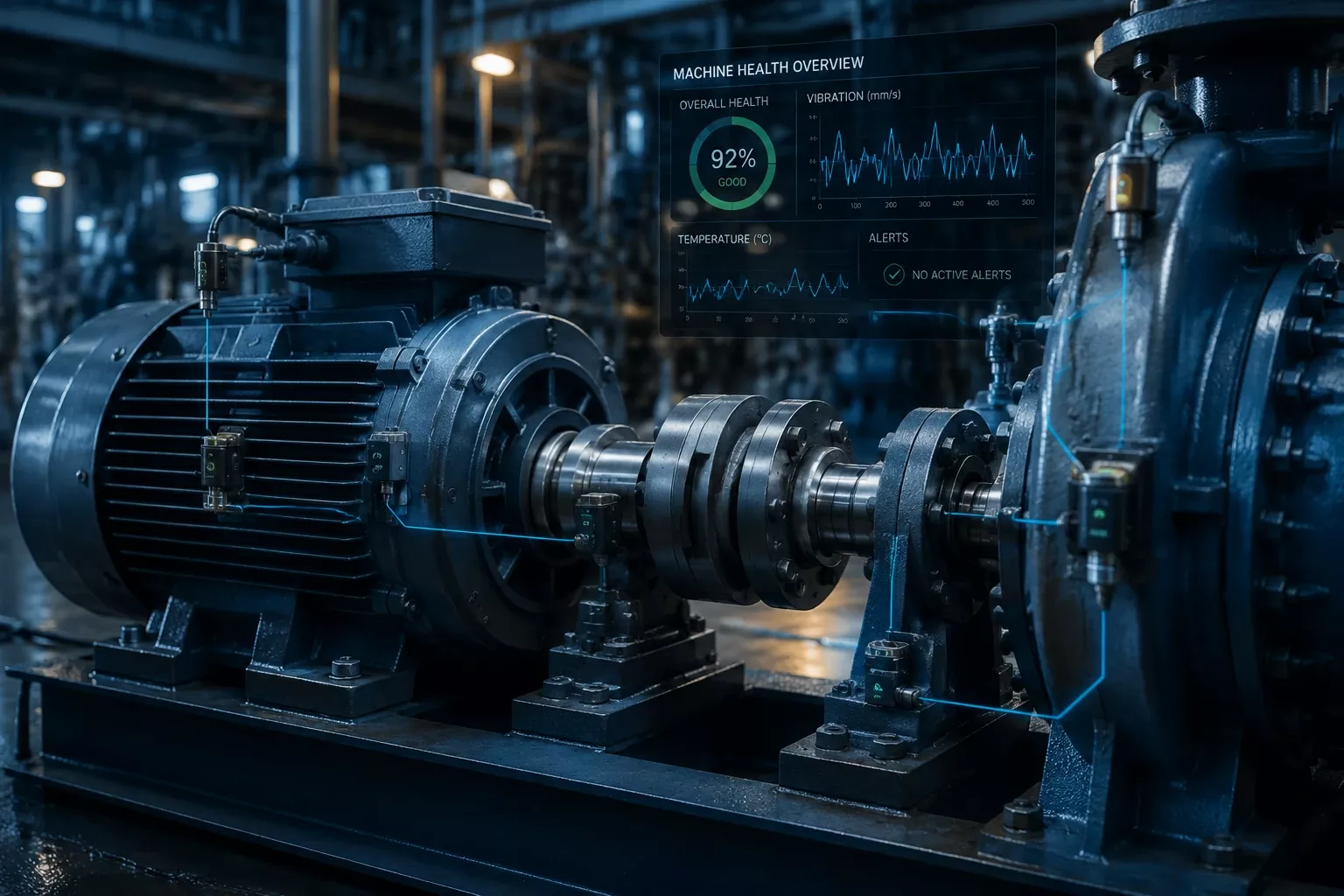
- IoT-based condition monitoring systems
- AI-driven predictive maintenance platforms
- Real-time vibration and temperature sensors
- Digital twin simulations for performance analysis
These technologies allow maintenance teams to identify potential failures long before they occur.
Benefits of Improving Machinery Reliability
Improving machinery reliability provides several important benefits for industrial operations.
Key advantages include:
- Reduced equipment downtime
- Lower maintenance costs
- Improved production efficiency
- Enhanced workplace safety
- Longer equipment service life
Reliable machinery also improves overall operational stability and helps organizations maintain consistent production output.
Conclusion
Machinery reliability is influenced by a combination of engineering design, material quality, installation accuracy, lubrication practices, environmental conditions, and maintenance strategies. Even small weaknesses in these areas can significantly reduce equipment performance and lifespan.
By focusing on critical reliability factors and implementing modern condition monitoring technologies, industries can minimize mechanical failures and ensure that their machinery operates efficiently and safely over long periods.
A proactive reliability strategy not only protects equipment but also strengthens overall operational productivity and profitability.
