Introduction
Rotating equipment plays a critical role in modern industrial operations. Machines such as pumps, compressors, turbines, motors, and gearboxes are widely used in industries including power generation, oil and gas, chemical processing, mining, and manufacturing.
Because these machines operate under continuous mechanical loads and dynamic conditions, they are susceptible to a range of mechanical and operational failures. Even minor faults can quickly escalate into major breakdowns if not detected early.
Understanding the most common failure mechanisms in rotating equipment allows engineers and maintenance teams to implement effective monitoring strategies, prevent unplanned downtime, and extend equipment lifespan.
What Is Rotating Equipment?
Rotating equipment refers to machines that generate motion through rotating components such as shafts, bearings, impellers, rotors, or gears. These machines convert energy into mechanical motion to perform industrial processes.
Typical examples include:
- Centrifugal pumps
- Industrial compressors
- Steam and gas turbines
- Electric motors
- Gearboxes and reducers
- Fans and blowers
Due to the high speeds and mechanical stresses involved, rotating machinery requires precise design, alignment, lubrication, and monitoring.
Common Types of Failures in Rotating Equipment
Several failure mechanisms commonly affect rotating machinery. These failures often originate from mechanical stress, improper maintenance, or operational issues.
Bearing Failures
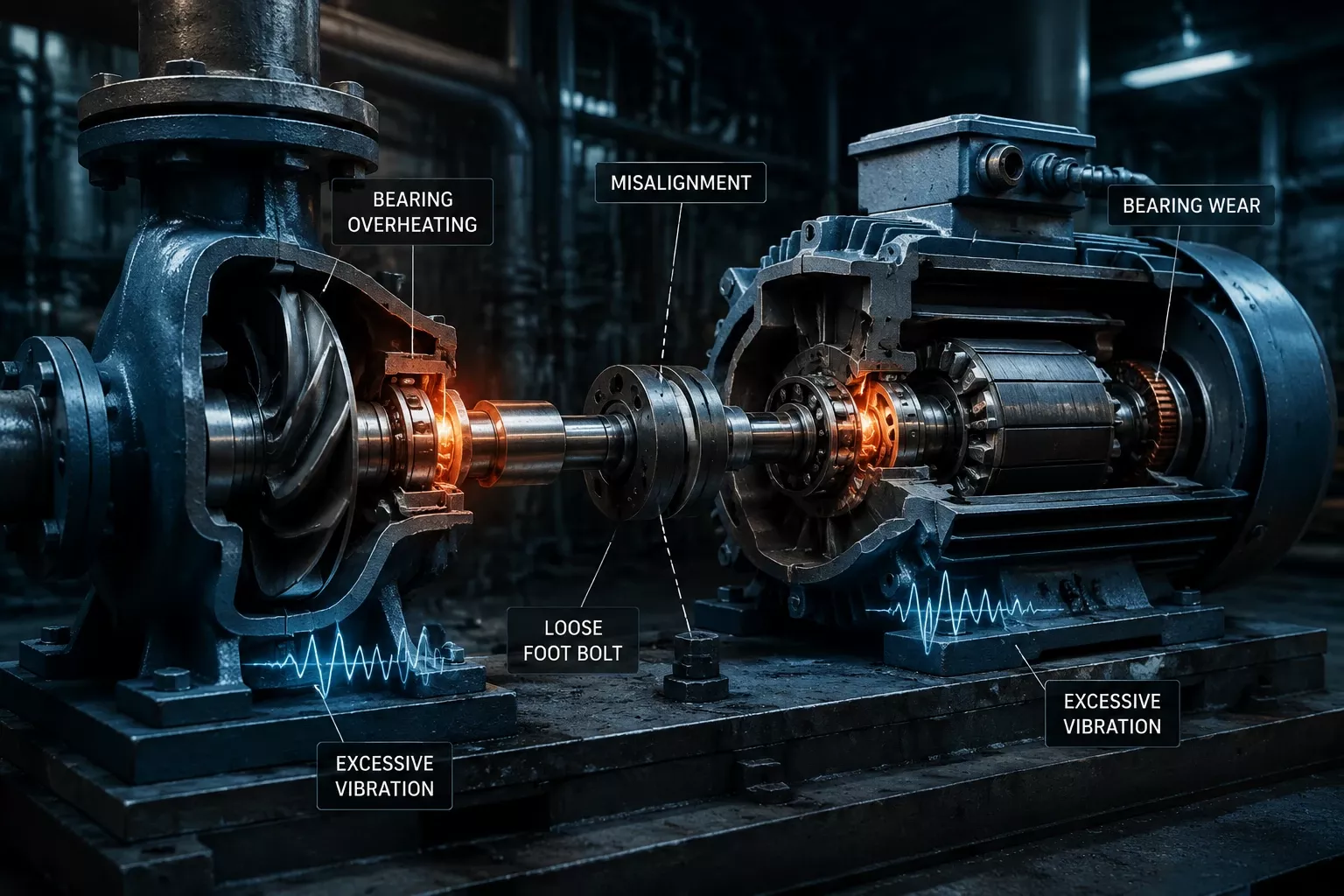
Bearings are among the most frequently failing components in rotating equipment. Since they support the rotating shaft and reduce friction, any issue with bearings can quickly impact machine performance.
Common causes of bearing failure include:
- Inadequate lubrication
- Contamination by dust or moisture
- Excessive loads
- Misalignment
- Fatigue and wear
Symptoms of bearing failure may include increased vibration, abnormal noise, and rising operating temperatures.
Shaft Misalignment
Shaft misalignment occurs when the rotational centers of connected shafts are not perfectly aligned. This condition commonly appears in equipment where motors are connected to pumps, compressors, or gearboxes.
Misalignment can cause:
- Excessive vibration
- Increased bearing loads
- Coupling wear
- Seal damage
- Reduced equipment efficiency
Even small misalignment errors can significantly reduce machinery reliability.
Rotor Imbalance
Rotor imbalance occurs when the mass distribution around the rotating axis is uneven. This condition generates centrifugal forces during rotation, leading to vibration and mechanical stress.
Common causes of imbalance include:
- Manufacturing tolerances
- Uneven material wear
- Dirt or deposits on rotating parts
- Damage to impellers or blades
If not corrected, imbalance can accelerate bearing wear and cause structural fatigue.
Lubrication Failures
Proper lubrication is essential for minimizing friction and wear in rotating components. When lubrication systems fail or lubricants degrade, mechanical components can overheat and deteriorate rapidly.
Typical lubrication problems include:
- Incorrect lubricant selection
- Insufficient lubrication supply
- Oil contamination
- Degraded or oxidized lubricant
Effective lubrication management programs significantly improve equipment reliability.
Mechanical Seal Failures
Mechanical seals are commonly used in pumps and compressors to prevent fluid leakage around rotating shafts. Seal failures can lead to product loss, environmental hazards, and equipment shutdown.
Seal failures may occur due to:
- Dry running conditions
- Excessive vibration
- Improper installation
- Thermal distortion
- Chemical incompatibility
Monitoring operating conditions and maintaining proper lubrication are essential for seal longevity.
Coupling Failures
Couplings connect two rotating shafts and transmit torque between them. They also accommodate small levels of misalignment and absorb mechanical shocks.
Coupling failures can result from:
- Excessive misalignment
- Overloading
- Poor installation
- Fatigue in flexible elements
- Lack of maintenance
Damaged couplings often produce abnormal vibration and noise during operation.
Gear Failures
In equipment that includes gear systems, such as gearboxes, gear failures are a major reliability concern.
Common gear failure modes include:
- Gear tooth wear
- Pitting and surface fatigue
- Scuffing due to lubrication issues
- Tooth breakage caused by overload
Proper lubrication, alignment, and load management are critical for preventing gear damage.
Cavitation in Pumps
Cavitation occurs when vapor bubbles form in a liquid due to pressure drops and then collapse violently near pump components.
This phenomenon can cause:
- Pitting damage on impellers
- Severe vibration
- Noise and reduced pump performance
Proper system design and maintaining adequate suction pressure can help prevent cavitation.
Effects of Failures in Rotating Machinery
Failures in rotating equipment can lead to several operational problems.
Major consequences include:
- Unexpected production downtime
- Increased maintenance costs
- Reduced equipment efficiency
- Safety risks for personnel
- Damage to surrounding components
In large industrial facilities, the failure of a single rotating machine can disrupt entire production processes.
Detecting Early Signs of Failure
Modern industries rely on condition monitoring techniques to detect early indicators of mechanical failure.
Common monitoring methods include:
Vibration Analysis
Vibration monitoring is one of the most effective tools for diagnosing rotating machinery problems. Different fault types generate unique vibration signatures that help engineers identify specific issues.
Oil Analysis
Oil analysis can reveal contamination, wear particles, and lubricant degradation. These indicators provide valuable information about internal component conditions.
Thermography
Infrared thermography helps detect abnormal heat patterns in bearings, motors, and mechanical connections.
Acoustic Monitoring
Ultrasonic and acoustic sensors can identify early-stage mechanical defects before they become severe.
Preventing Failures in Rotating Equipment
Preventing failures requires a proactive maintenance strategy combined with proper machine operation.
Key preventive measures include:
- Maintaining proper shaft alignment
- Implementing regular lubrication programs
- Performing routine vibration monitoring
- Inspecting bearings and seals periodically
- Balancing rotating components
- Training operators to recognize abnormal machine behavior
Predictive maintenance programs have proven highly effective in reducing unexpected equipment failures.
Conclusion
Rotating equipment is essential to many industrial processes, but it is also vulnerable to a variety of mechanical failures. Common issues such as bearing damage, misalignment, imbalance, lubrication problems, and seal failures can significantly impact machinery performance and reliability.
By understanding these failure mechanisms and applying modern condition monitoring techniques, industries can detect problems early and implement preventive maintenance strategies. This approach helps ensure safe, efficient, and reliable operation of critical rotating machinery.
