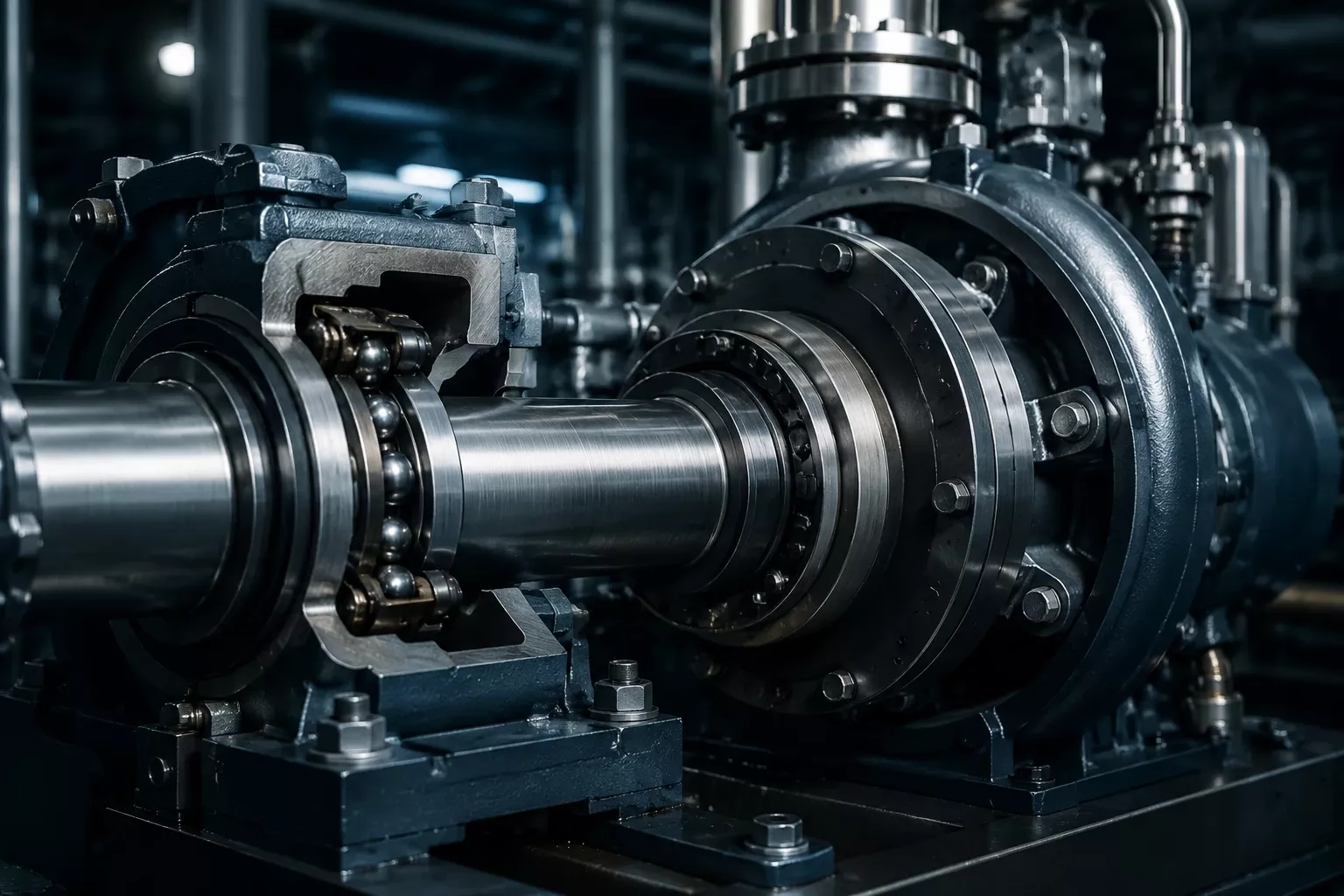
Basics of Bearings, Seals, and Mechanical Interfaces
Introduction
In every rotating machine—from industrial pumps and compressors to electric motors and gearboxes—mechanical components must work together smoothly while handling high loads, friction, and continuous motion. Among the most critical elements that enable reliable machine operation are bearings, seals, and mechanical interfaces.
Bearings support rotating shafts and reduce friction, seals prevent leakage and contamination, and mechanical interfaces ensure proper interaction between connected components. Together, these elements play a fundamental role in maintaining machine efficiency, durability, and operational stability.
Understanding the basics of these components is essential for engineers, maintenance technicians, and anyone involved in the design or operation of rotating machinery.
What Are Bearings?
A bearing is a mechanical component designed to support rotating shafts while minimizing friction between moving parts. Bearings allow shafts to rotate smoothly while carrying radial and axial loads generated during machine operation.
Without bearings, rotating components would experience excessive friction, heat generation, and rapid wear.
Bearings are typically placed between a shaft and a stationary housing, allowing controlled motion while maintaining alignment and stability.
Primary Functions of Bearings
Bearings serve several important purposes in rotating machinery:
- Reducing friction between moving parts
- Supporting radial and axial loads
- Maintaining shaft alignment
- Enabling smooth rotational motion
- Extending the service life of mechanical systems
Proper bearing selection is critical because the wrong type or size can lead to premature machine failure.
Common Types of Bearings
Different types of bearings are used depending on load conditions, speed, and environmental factors.
Ball Bearings
Ball bearings are one of the most widely used bearing types. They use rolling balls between inner and outer races to reduce friction.
Characteristics of ball bearings include:
- Low friction
- High-speed capability
- Moderate load capacity
- Compact design
Ball bearings are commonly used in electric motors, pumps, and light industrial equipment.
Roller Bearings
Roller bearings use cylindrical rolling elements instead of balls. Because the contact area between the rollers and raceways is larger than in ball bearings, roller bearings are capable of carrying heavier loads.
These bearings are widely used in industrial machinery where high radial loads are present.
Common characteristics include:
- Higher load capacity than ball bearings
- Good resistance to shock loads
- Moderate speed capability
- Suitable for heavy-duty industrial applications
Roller bearings are frequently used in gearboxes, heavy motors, conveyors, and industrial pumps.
Tapered Roller Bearings
Tapered roller bearings are designed to support combined radial and axial loads. Their conical roller geometry allows them to handle forces from multiple directions simultaneously.
These bearings are commonly used in applications such as:
- Automotive wheel hubs
- Gearboxes
- Heavy machinery
- Industrial drive systems
Because of their design, tapered roller bearings can provide high stiffness and precise shaft positioning.
What Are Seals?
Seals are mechanical components designed to prevent leakage and protect internal machine parts from contamination. They are essential in rotating equipment because they help maintain lubrication while preventing dust, moisture, or other contaminants from entering the system.
Without proper sealing, lubricants can escape and contaminants can enter, leading to accelerated wear and mechanical failure.
Functions of Seals
Seals perform several important functions in rotating machinery:
- Prevent lubricant leakage
- Protect bearings from contamination
- Maintain pressure within systems
- Improve equipment reliability
- Extend component lifespan
Effective sealing is critical in equipment such as pumps, compressors, and hydraulic systems.
Types of Mechanical Seals
Several types of seals are used depending on the application and operating conditions.
Lip Seals
Lip seals are one of the most common types used in rotating shafts. They consist of a flexible elastomer lip that contacts the shaft surface to prevent leakage.
They are widely used in:
- Electric motors
- Automotive systems
- Small industrial machinery
Lip seals are simple, cost-effective, and easy to install.
Mechanical Seals
Mechanical seals are more advanced sealing devices used in pumps and compressors. They typically consist of two precision-machined faces that rotate against each other to create a tight sealing interface.
These seals are capable of handling:
- High pressures
- High temperatures
- Aggressive fluids
Mechanical seals are essential in industries such as oil and gas, chemical processing, and water treatment.
Understanding Mechanical Interfaces
A mechanical interface refers to the contact surface or connection point between two interacting components in a machine. These interfaces play a crucial role in ensuring proper load transfer, alignment, and mechanical stability.
Examples of common mechanical interfaces include:
- Shaft-to-bearing interfaces
- Shaft-to-coupling connections
- Seal-to-shaft contact surfaces
- Bearing-to-housing fits
If these interfaces are poorly designed or improperly assembled, problems such as vibration, wear, and misalignment can occur.
Importance of Proper Integration
Bearings, seals, and mechanical interfaces must work together as an integrated system. A problem in one component can quickly affect the others.
For example:
- A worn seal may allow contaminants to damage bearings.
- Misalignment at a mechanical interface may overload bearings.
- Poor lubrication can accelerate wear in both seals and bearings.
Because of this interdependence, engineers must consider all these components when designing or maintaining rotating machinery.
Maintenance Considerations
Proper maintenance significantly improves the lifespan of bearings and seals.
Important maintenance practices include:
- Regular lubrication
- Monitoring vibration levels
- Inspecting seals for leakage
- Maintaining correct shaft alignment
- Replacing worn components promptly
Predictive maintenance techniques such as vibration analysis, oil analysis, and thermography are commonly used to detect early signs of component failure.
Conclusion
Bearings, seals, and mechanical interfaces form the foundation of reliable rotating machinery. Bearings support rotating shafts and reduce friction, seals protect internal components from leakage and contamination, and mechanical interfaces ensure stable interaction between machine parts.
Understanding the roles and interactions of these components allows engineers and maintenance professionals to design more reliable systems, improve equipment efficiency, and prevent costly machine failures.
Proper selection, installation, and maintenance of these critical elements are essential for achieving long-term performance in industrial machinery.
